When Patek Philippe released the Aquanaut in 1997, it was a deliberate break with its own habits. Here was a company whose reputation rested on slim gold dress watches, launching a sporty steel watch on a rubber strap. Almost thirty years later that gamble looks like one of the smartest decisions the brand ever made. The Aquanaut has become the watch people buy when they want a Patek they can actually wear every day, and the model line now runs from simple steel to white gold chronographs. This guide covers where the Aquanaut came from, what defines its design, which references matter, and how to choose between them.
Why the Aquanaut exists
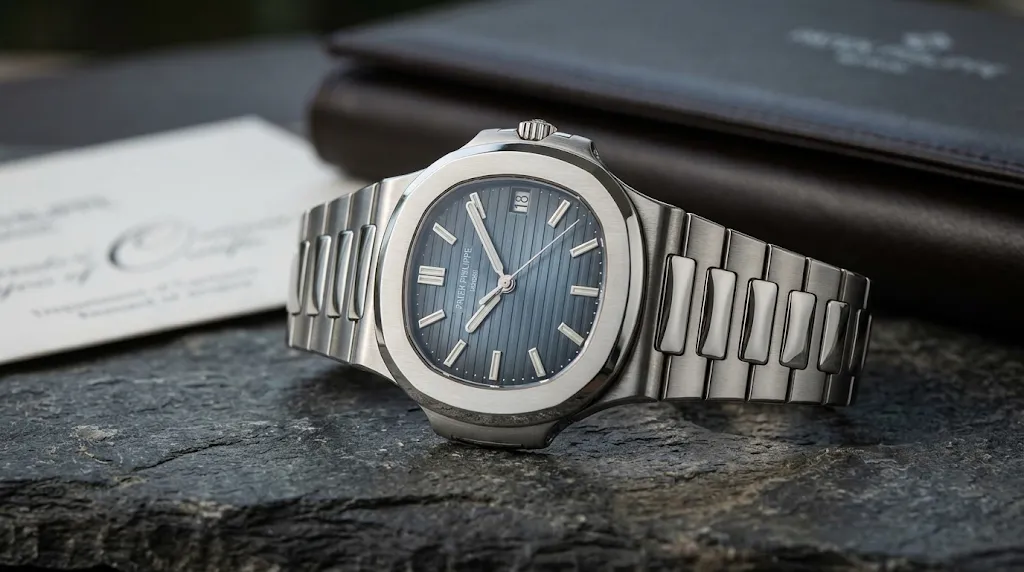
By the mid 1990s the Nautilus had been in the catalogue for two decades and had settled into a fairly senior, fairly expensive position. Patek wanted something younger. The brief behind the Aquanaut was to keep the sporty, integrated look of the Nautilus but make it more relaxed, more accessible and more obviously built for use rather than for safety.
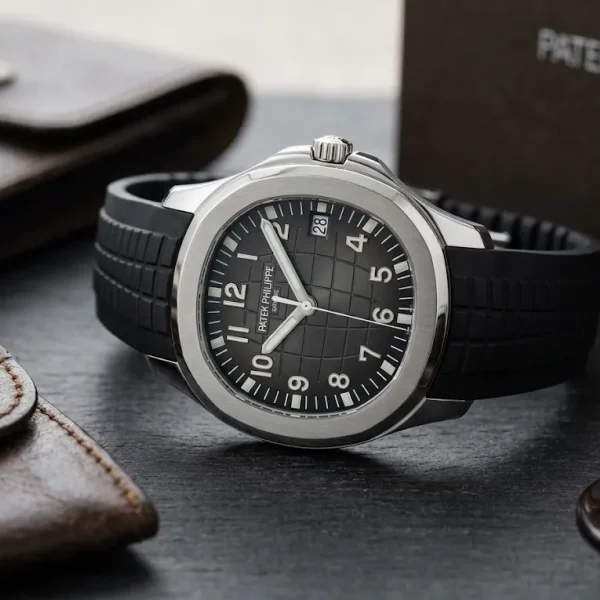
The first Aquanaut, reference 5060 from 1997, arrived in 1997 with a distinctive rounded octagonal bezel. It sits somewhere between the Nautilus’s porthole shape and a traditional cushion case, and it has stayed with the line ever since. The other signature was the strap. Where luxury watches of the period almost always came on leather, the Aquanaut came on a tropical composite rubber strap in a matching colour, cut with a fine grid pattern. It was waterproof, comfortable and unapologetically casual, a clear signal that this watch was meant to be worn.
The design codes
Three elements make an Aquanaut instantly recognisable.
- The bezel. A rounded octagon with eight softly defined sides, polished on the top surface and brushed on the flanks. It reads as sporty without being aggressive.
- The dial. An embossed pattern that collectors usually describe as a grenade or checkerboard finish. The texture catches light differently depending on the angle, which gives the face depth that a flat dial simply does not have. Most references pair it with applied numerals and a clean, legible layout.
- The case to strap line. The case curves into the strap with no separate lugs and no visible gap. It is the same integrated idea the Nautilus uses, softened for a more casual watch.
The result is a watch that looks entirely at home with a t-shirt and equally at home under a shirt cuff, which is exactly what the design set out to achieve.
The Aquanaut line, reference by reference
The Aquanaut family is easier to understand once you group it by what each reference does.
- The origins. The 5060 from 1997 was followed by the 5065 and 5066, slightly smaller and larger takes on the same idea. These early pieces set the template and are now the most collectable part of the line.
- The steel benchmark, 5167A. A 40mm steel case with the embossed dial, this is the Aquanaut most people picture. It is the reference to buy if you want the classic Aquanaut experience at the most sensible entry point, and it remains the strongest seller in the range.
- The Travel Time, 5164. A 40mm Aquanaut with a second time zone, controlled by two small pushers set into the left side of the case. It is the practical choice for anyone who actually travels with their watch, and it is available in steel as well as rose and white gold.
- The larger case, 5168G. A 42mm white gold Aquanaut with a blue dial. It is the reference for buyers who want more presence on the wrist and prefer the weight and warmth of gold over steel.
- The chronograph, 5968. A 42mm chronograph that gives the Aquanaut a properly complicated, sportier character. It is offered in steel and in white gold, and it is the reference most often chosen by buyers who already own a simpler Aquanaut.
- The annual calendar, 5261R. A rose gold Aquanaut with an annual calendar, adding day, date and month to the dial. It is the most complicated Aquanaut and a strong option if the point of the purchase is the movement rather than the strap.
- The Aquanaut Luce. The line for women, introduced in 2004 and still going, with smaller cases and a lighter, jewellery led feel.
Alongside the standard references, Patek has used the Aquanaut platform for research pieces, including the Advanced Research 5650G from 2017 with its silicon based balance spring. Those sit outside the regular line, but they explain why the Aquanaut is treated as more than a fashion model.
Aquanaut or Nautilus?
This is the question most buyers ask, and the honest answer is that they are different watches for different people. The Nautilus is the more formal, more angular design, and it carries the heavier collector premium as a result. The Aquanaut is the softer, more wearable watch, it costs meaningfully less for a comparable level of finishing, and its rubber strap means you never have to think about whether it is appropriate to wear. If you want the most recognised shape in the catalogue and you are comfortable with the premium that comes with it, choose the Nautilus. If you want a Patek you will genuinely wear most days, the Aquanaut is the better watch.
How to choose an Aquanaut
Four points cover most of the decision.
- Size and material first. The 40mm steel references are the everyday sweet spot. The 42mm pieces and the gold models are for buyers who want presence.
- Complication second. A second time zone if you travel, a chronograph if you want the sportier look, an annual calendar if the movement is the reason you are buying.
- Condition and completeness third. Factory case lines, an unpolished bezel, a correct strap and the original box and papers all matter. A complete watch is a different asset from a loose one.
- Buy the reference, not the trend. Steel Aquanaut and Nautilus values rose sharply and then settled. Understanding that cycle will serve you better than chasing a headline number.
Every Aquanaut we present is checked for authenticity and condition before it is offered. If you would like help comparing two references, or a straight view on which Aquanaut suits how you actually wear a watch, our team is happy to talk it through. You can browse the full collection or the Patek Philippe pieces we have available, and every watch we sell goes through our authentication process. You can also see the maker’s own Aquanaut line for the current catalogue.