Owning Rolex watches in 2026 is no longer just about telling time; it is about managing a high-performing asset. Whether you inherited a vintage Rolex Datejust or fought your way up a five-year waiting list for a GMT-Master II, the question eventually arises: what is this piece of steel and gold actually worth in today’s Australian dollars?
If you are looking for a simple “one-size-fits-all” price list, you might be disappointed. The Rolex market is a living, breathing ecosystem influenced by global trends, local currency fluctuations, and the obsessive attention to detail of collectors. This guide will peel back the curtain on how valuation works in the current Australian climate, helping you navigate the difference between what a dealer tells you and what the market is willing to pay.
The Reality of Rolex Valuation in the Australian Market
The Australian Rolex market has always been a unique beast. We are geographically isolated, yet our appetite for luxury remains world-class. In 2026, the “hype” years of the early 2020s have stabilised into a more mature, discerning market. Gone are the days when any stainless steel model would instantly triple in value the moment you walked out of the boutique. Today, value is driven by authenticity, provenance, and genuine scarcity.
Why Your Watch’s Value Isn’t Just the Number on the Tag
The most common mistake beginners make is looking at the price they paid at an Authorised Dealer (AD) and assuming that is the “value.” In the world of horology, the price tag is merely a suggestion. Depending on the model, your watch might be worth 20% less than you paid for it the moment you put it on, or it could be worth double.
Think of a Rolex like a piece of blue-chip real estate in Sydney or Melbourne. The “value” isn’t what the council says it’s worth for tax purposes; it’s what a motivated buyer is willing to transfer into your bank account on a Tuesday afternoon. Factors like the AUD/USD exchange rate play a massive role here. Since Rolex prices are pegged to global demand, a weak Australian dollar often pushes local secondary market prices higher, as international buyers look to “arbitrage” our local stock.
The Three Faces of “Worth”: Retail, Insurance, and Market Value
To understand your watch’s worth, you must first define which “worth” you are talking about. There are three distinct figures you will encounter, and confusing them is a recipe for financial frustration.
1. Recommended Retail Price (RRP)
The RRP is the price set by Rolex Geneva for the Australian market. This is what you pay if you are lucky enough to be offered a brand-new watch by an AD in Collins St or Castlereagh St. For many professional models, the RRP or MSRP is actually the lowest price you will see. It is a controlled figure that doesn’t account for the supply-and-demand imbalance. In 2026, the RRP serves as a baseline, but for “hot” models, it’s often an unattainable dream for the average buyer.
2. Insurance Replacement Value
When you call your insurer to cover your Submariner, they will often ask for an appraisal. This number is typically the highest of the three. Why? Because insurance value represents the cost to replace the item immediately in the event of theft or loss. If a watch has a three-year waiting list at retail, the insurance value must reflect the secondary market price, the “grey market” price, so you can actually go out and buy a replacement today. Never mistake your insurance appraisal for the amount of cash you’d get if you sold the watch.
3. Secondary Market (Resale) Value
This is the “real” number. It is the amount of cash a dealer will give you, or the price a private collector will pay. It accounts for the watch’s condition, its completeness, and the current “temperature” of the market. If you need to liquidate your asset within 48 hours, this is the figure that matters. In 2026, secondary market values within the pre-owned market for Rolex watches have found a “new normal,” rewarding those who kept their watches in pristine condition and punishing those who bought into fleeting trends.
The “Big Five” Factors That Dictate Your Rolex’s Price
If you want to estimate your watch’s value like a pro, you need to look at it through the lens of a professional grader. Five specific variables determine whether your Rolex is a “keeper” or a gold mine.
1. Model and Reference Number
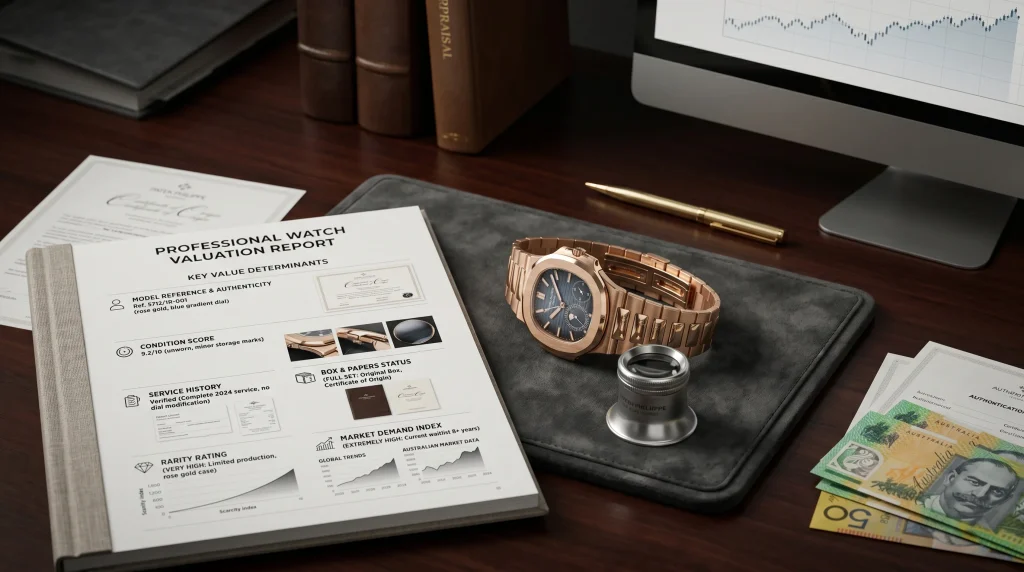
In the world of Rolex, a single digit can be worth ten thousand dollars. The reference number (found between the lugs or on your warranty card) tells the story. A “five-digit” neo-vintage Submariner (like the 16610) has a completely different buyer profile and price point than the modern “six-digit” Ceramic version (the 126610LN). Collectors in 2026 are increasingly focused on these reference numbers to determine movement reliability and case proportions.
2. Condition and Service History
The “unpolished” dream is still alive in 2026. Collectors prize original factory sharp edges over a shiny, over-polished case. If your watch has been “buffed” to look new, you may have inadvertently shaved thousands off its value by softening the lugs. Furthermore, a documented service history from an official Rolex Service Centre (RSC) acts like a logbook for a Porsche; it proves the watch hasn’t been tinkered with by an amateur and is running within COSC specifications.
3. The “Full Set” Advantage: Box and Papers
In an era where “super-fakes” are increasingly sophisticated, provenance is king. A “Full Set” includes the outer box, inner green box, the manual, the hangtags, and, most importantly, the signed warranty card. Selling a Rolex “naked” (watch only) typically results in a 15% to 25% haircut on the price. In the Australian market, having a card originally stamped by a local AD can sometimes command a slight premium for local buyers who value domestic provenance.
4. Rarity and Dial Variations
Rolex is famous for “hidden” rarities. In 2026, we see huge price swings for “MK1” bezels on GMTs or specific dial colours that were only produced for a short window. For example, the “Tiffany” blue Oyster Perpetuals continue to defy logic in their pricing due to their short production run. If your watch has a “flaw” or a unique colour variation, do not dismiss it; it might be exactly what a specialist collector is hunting for.
5. Current Market Demand in Australia
The Australian market is sensitive to local economic shifts. When interest rates are high and discretionary spending dips in Sydney or Brisbane, we see an influx of watches hit the secondary market, which can temporarily soften prices. However, certain “grail” pieces remain immune to these shifts. Understanding whether we are currently in a “Buyer’s Market” or a “Seller’s Market” in Australia is essential for timing your exit.
How to Research Your Watch’s Value Today
Don’t guess. The data is out there, but you have to know how to filter the noise from the signal.
Reviewing Realised Auction Prices
For high-end or vintage pieces, public auction houses like Sotheby’s or local Australian specialists provide “realised prices.” Unlike a listing price, a realised price is an objective fact. However, remember that auction houses charge a “Buyer’s Premium” (often 20-25%), so the price the buyer paid is significantly higher than what the seller actually took home.
Consulting Local Australian Dealers
If you want an immediate, no-nonsense figure, take your watch to a reputable secondary dealer in your capital city. They will give you a “buy-in” price (what they pay you in cash) and a “trade-in” price (credit toward another watch). The spread between their buy price and their eventual sell price covers their overhead, warranty, and profit. If a dealer offers you $15,000, you can bet the “market value” is closer to $18,000, which helps you understand at what price a retail transaction actually occurs.
A Look at Performance: Popular Rolex Models in 2026
How are the heavy hitters performing this year? Let’s look at the current landscape for the most traded models in Australia.
The Stainless Steel Professionals
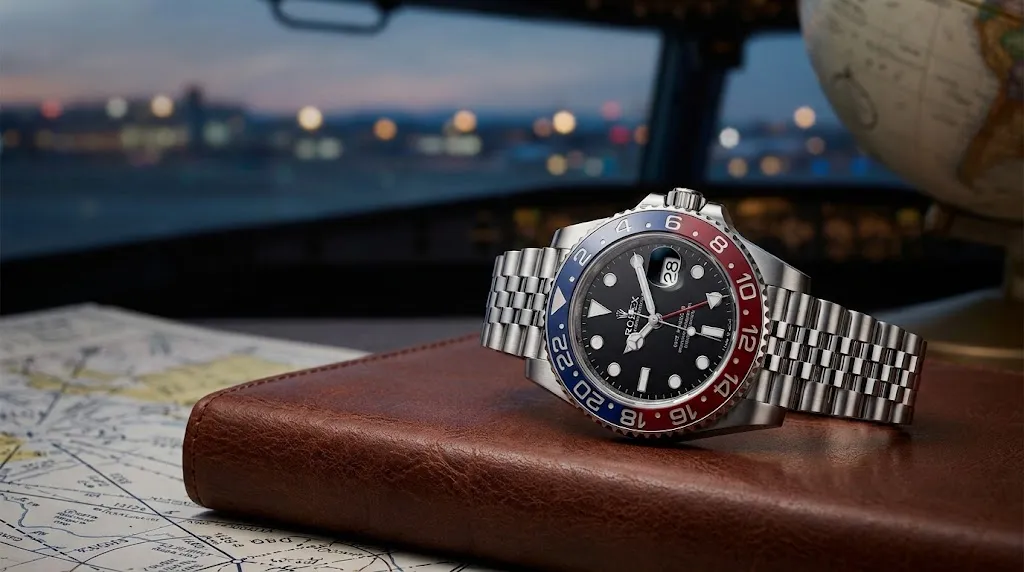
These remain the gold standard. The Submariner and its beefier sibling, the Deepsea, are among the most liquid assets in the watch world; you can sell one in an hour in any major city. The Rolex GMT-Master II (specifically the “Pepsi” and “Batgirl” variants) and the Explorer II continue to trade well above retail due to persistent supply shortages. The Rolex Daytona remains the king of the mountain, rivalling even the secondary market heat of a Patek Philippe, though the astronomical “bubble” pricing of previous years has levelled off, making it a more stable, if still very expensive, investment.
The Classic Staples
The Datejust is the backbone of the Rolex market. While it doesn’t usually see the 100% markups of the Daytona, it holds its value remarkably well. In 2026, the 41mm models with fluted bezels and Jubilee bracelets are the most sought-after. The Rolex Oyster Perpetual, once considered an entry-level piece, has maintained a cult following for its vibrant dial colours, though prices for the more conservative silver, black dial, or blue variations have remained steady and accessible.
The Prestige Pieces
Gold is back. As steel prices stabilised, many Australian investors moved toward the “President” (Day-Date). The 40mm versions in Rose Gold (Everose), white gold, or Yellow Gold are performing strongly as a hedge against currency volatility. The Sky-Dweller, Rolex’s most complicated watch, remains a niche but prestigious choice, with the stainless steel blue-dial version still commanding a significant premium.
Common Pitfalls to Avoid When Valuing Your Rolex
Even seasoned enthusiasts can fall into traps that lead to poor financial decisions.
Overestimating Condition
We all love our watches, but that “character-adding” scratch on the lug is just “damage” to a buyer. Many owners think their watch is “Mint” when it is actually “Good.” Be brutally honest. If there is a chip in the sapphire crystal or a stretch in the bracelet links, the value will drop. In 2026, buyers use high-resolution macro photography to inspect every millimetre; you should do the same.
Ignoring Aftermarket Modifications
The “iced out” look might be popular in some circles, but adding aftermarket diamonds to a Rolex is the fastest way to destroy its resale value. To a serious collector, an aftermarket bezel or dial makes the watch “adulterated.” In many cases, Rolex itself will refuse to service a watch with non-genuine parts until you pay to have it returned to factory specifications. Always keep your original parts.
The Emotional Premium Trap
“But I wore this at my wedding!” is a sentiment that carries zero weight in the marketplace. It is easy to overvalue a watch because of the memories attached to it. When seeking a valuation, you must view the watch as a serial number and a set of specs. Detaching your emotions from the asset will allow you to negotiate more effectively and avoid being offended by low-ball offers that are actually fair market value.
Where and How to Sell Your Rolex in Australia
Once you know the value, how do you realise it? Australia offers several pathways, each with pros and cons.
Private Sales vs. Professional Consignment
Selling privately (via Facebook groups or forums) can net you the highest price because you skip the middleman. However, it comes with significant security risks and the hassle of “tyre-kickers.” Consignment, where a dealer sells the watch for you and takes a 10-15% cut, is a safer middle ground. The dealer handles the marketing and the “scary” part of the transaction, while you benefit from their reputation.
Direct Outright Sales to Specialists
If you need the money today, an outright sale to a specialist dealer is the way to go. You will take a lower price (the “wholesale” price), but the transaction is instant and secure. This is the preferred method for most Australians who value their time and safety over an extra $500.
Auction Houses: When Are They Worth It?
Auctions are a gamble. They are best reserved for extremely rare vintage pieces or “birth year” watches with a unique story. For a standard modern Submariner, an auction is often overkill and may result in a lower net return after fees than a simple dealer sale.
How to Protect the Value of Your Investment
Valuation isn’t just about the exit; it’s about maintenance.
Storage and Insurance
In 2026, specialised watch insurance is a must. Standard home and contents policies often have “sub-limits” for jewellery that won’t even cover half the cost of a Rolex. Use a specialised insurer that covers “agreed value” rather than “market value.” As for storage, a high-quality fireproof safe is the bare minimum, but for high-value collections, a bank safety deposit box remains the gold standard for security.
Smart Servicing Practices
Rolex recommends a service every 10 years, but if you plan to sell, a fresh service card from an RSC can be a major selling point. However, never have a vintage watch polished during a service without understanding the implications. Always instruct the watchmaker to leave the case and dial original if you are dealing with a piece from the 1990s or earlier.
Expert Tips for the Australian Rolex Enthusiast
The Australian market is tight-knit. My final piece of advice is to build relationships. Whether it is with a local AD or a trusted secondary dealer in Sydney’s Arcade or Melbourne’s CBD, your reputation as a buyer and seller matters.
In 2026, “buy the seller” is as important as “buy the watch.” If you are buying, ensure the dealer has a physical presence and a history of transparency. If you are selling, be honest about the watch’s history. The Rolex market may fluctuate, but the value of a well-maintained, authentic timepiece from this premier luxury watch brand is one of the few constants in the luxury world. Keep your papers, keep your boxes, and most importantly, wear your watch, the “value” is only one part of the joy of ownership.
Ready to find out what your Rolex is really worth? Visit Swiss Watch Dealer for expert guidance, trusted Rolex valuations and professional support from an Australian luxury watch specialist.